Yamaha XSR 900
Every Yamaha product, whether it is a two-wheel, outboard, generator, wave runner, snowmobile, quad and side by side, has a logo that is actually stylized trio of interlocking tuning forks. The Yamaha Motor Co. logo that today it is one of the largest manufacturers of motorcycles, outboard motors and much more, reminds that it originated from the manufacturers of musical instruments, more precisely – pianos and reed organs. What’s more, even today apart from motoring, Yamaha is globally a very important and influential manufacturer of musical instruments.
Yamaha was established in 1887 as a piano and reed organ manufacturer by Torakusu Yamaha as Nippon Gakki Company, Limited in Hamamatsu. When World War II began, Nippon Gakki plants produced propellers for Zero fighter planes, fuel tanks, and wing parts. These items laid the groundwork for broader diversification in the postwar years. In the meantime, Nippon Gakki had to stop making musical instruments altogether in 1945.
Genichi Kawakami was the first son of Kaichi Kawakami, the third-generation president of Nippon Gakki (musical instruments and electronics; presently Yamaha Corporation). Genichi studied and graduated from Takachiho Higher Commercial School in March of 1934. In July of 1937, he was the second Kawakami to join the Nippon Gakki Company. He quickly rose to positions of manager of the company’s Tenryu Factory Company (musical instruments) and then Senior General Manager, before assuming the position of fourth-generation President in 1950 at the young age of 38.
In 1953, Genichi was looking for a way to make use of idle machining equipment that had previously been used to make aircraft propellers. He explored producing many products, including sewing machines, auto parts, scooters, three-wheeled utility vehicles, and…motorcycles. Market and competitive factors led him to focus on the motorcycle market. Genichi actually visited the United States many times during this period.
In August of 1954 the first model was complete. It was the Yamaha YA-1. The bike was powered by an air-cooled, 2-stroke, single cylinder 125cc engine. Once finished, it was put through an unprecedented 10,000 km endurance test to ensure that its quality was top-class. This was destined to be the first crystallization of what has now become a long tradition of Yamaha creativity and an inexhaustible spirit of challenge.
Then, in January of 1955 the Hamakita Factory of Nippon Gakki was built and production began on the YA-1. With confidence in the new direction that Genichi was taking, Yamaha Motor Co., Ltd. was founded on July 1, 1955. Staffed by 274 enthusiastic employees, the new motorcycle manufacturer built about 200 units per month.
By 1956, a second model was ready for production. This was the YC1, a 175cc single cylinder two-stroke. In 1957 Yamaha began production of its first 250cc, two-stroke twin, the YD1.
By the late 1960s, Yamaha had quality products that had proven themselves in the global marketplace based on superior performance and innovation. Distribution and product diversity were on the right track.
From then until today, Yamaha is present in practically all motorcycle categories. From the Super Sport category, through the Touring/Enduro segment all the way to scooters. A significant place in the Yamaha range belongs to the Naked motorcycle category.
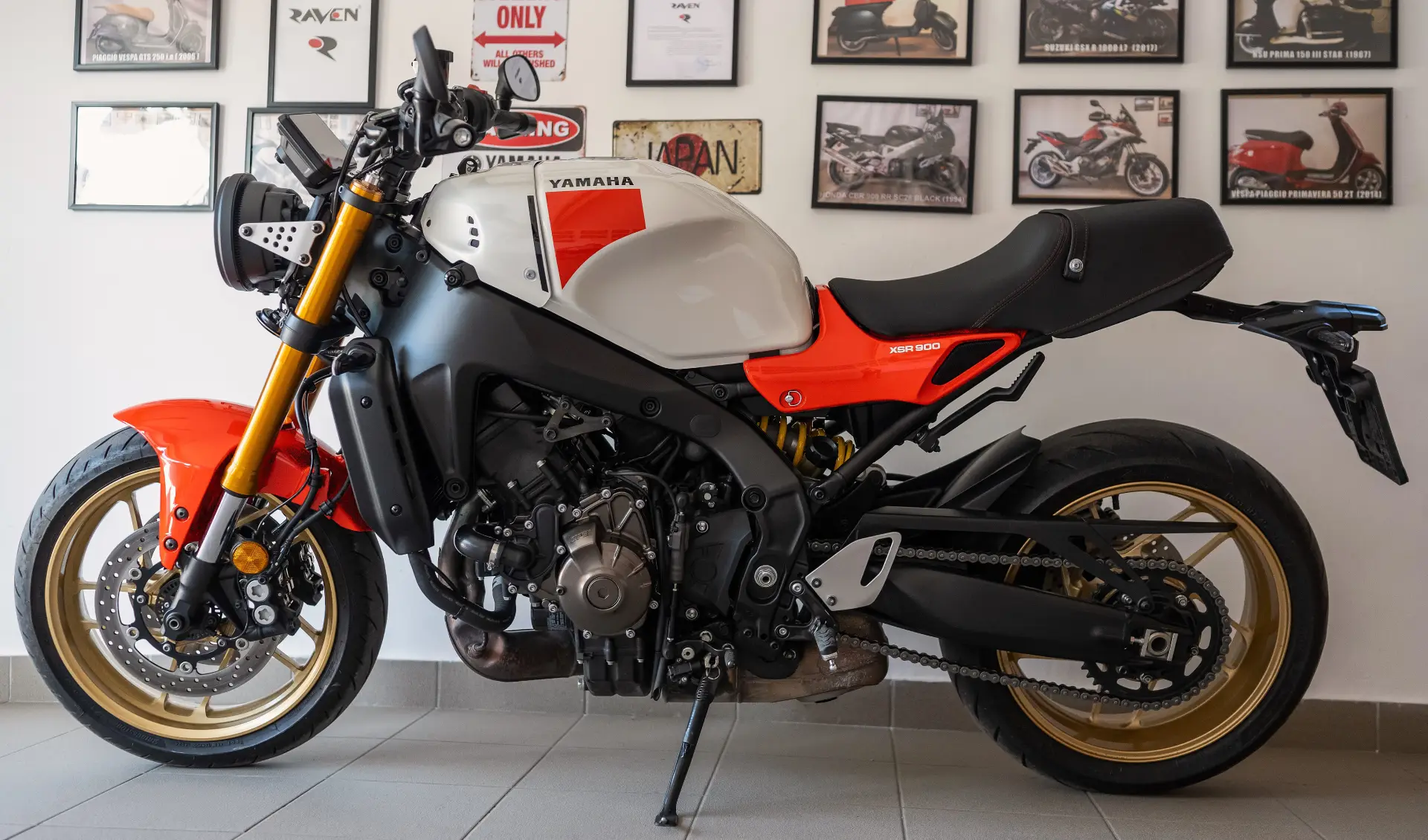
The previous story is told because we found and bought, now already, famous 2025 Yamaha XSR 900 model.
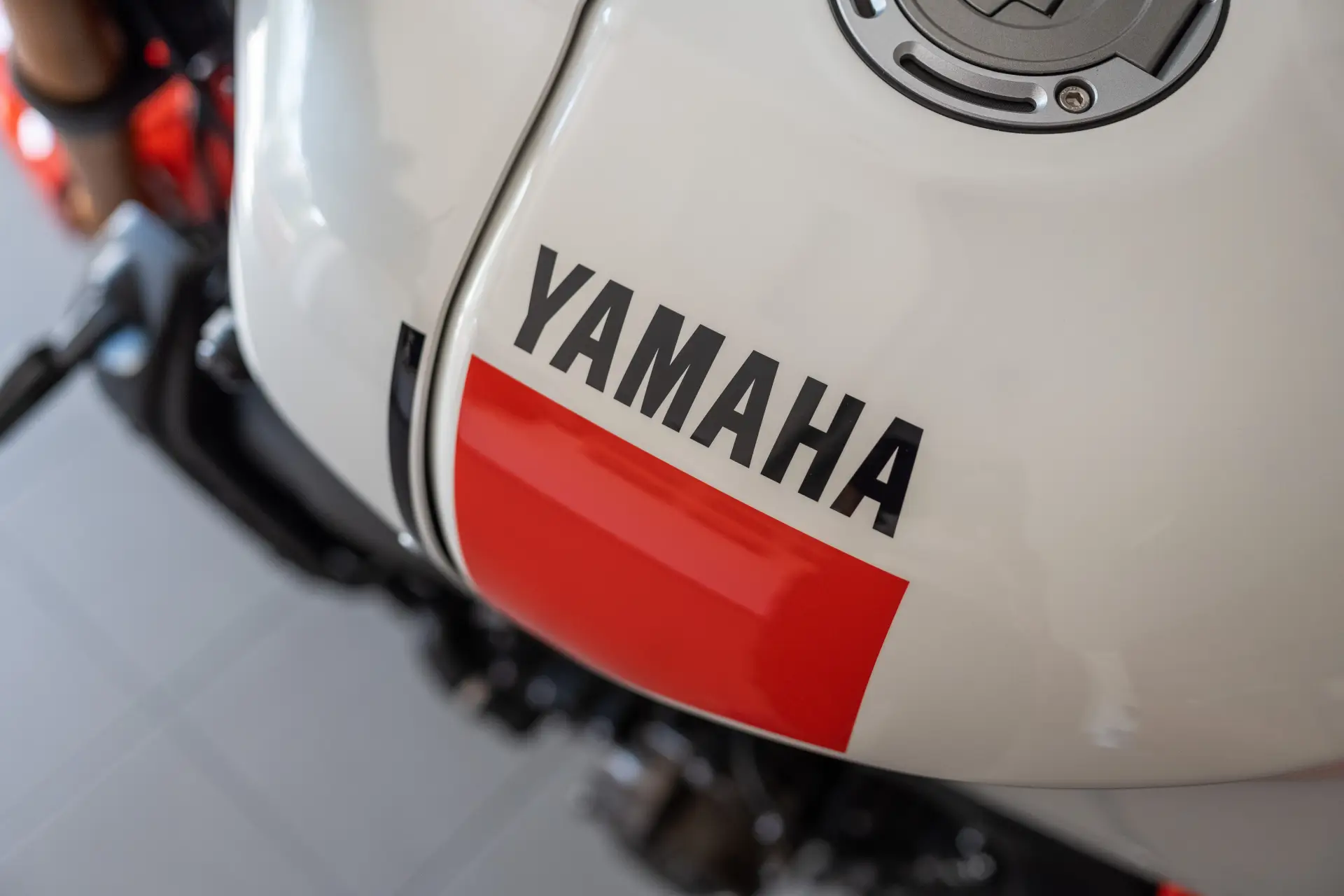
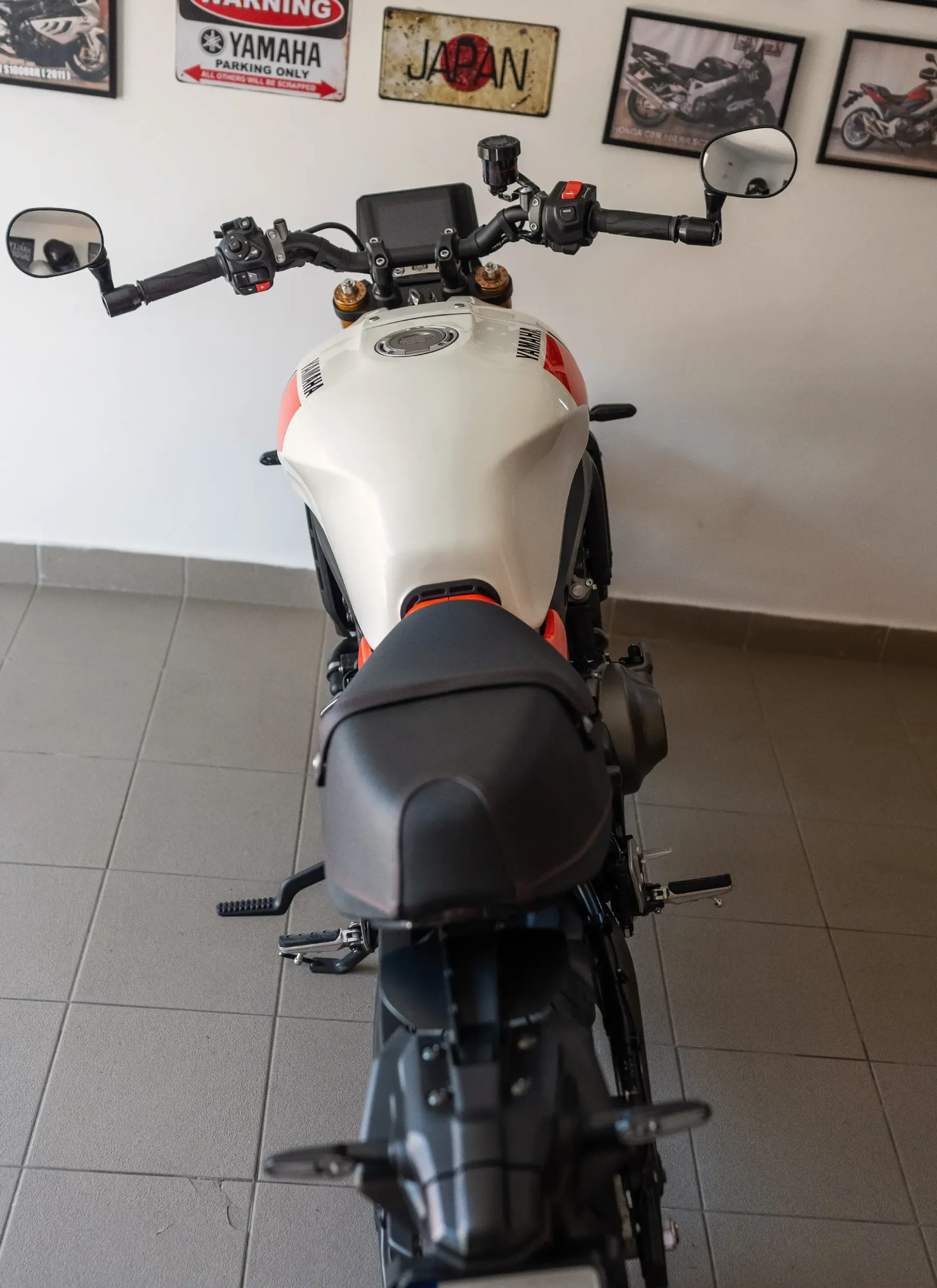
The Yamaha XSR900 is a neo-retro high-performance motorcycle that combines the look of racing models from the 1980s with modern mechanics and a three-cylinder CP3 engine. It was created under the slogan “Faster Sons”, which combines Yamaha’s racing heritage from the past with modern technology. Visually, it draws on legendary Yamaha two-wheelers and racing silhouettes from the 70s and 80s ( like Kenny Roberts’ recognizable colors ).
Yamaha first introduced the model in 2016, based on the platform and frame of the popular MT-09 tuner. It was powered by a liquid-cooled three-cylinder engine with a displacement of 847 cc and 115 horsepower. Bringing a retro aesthetic, round headlight and aluminum details, it appealed to riders who wanted the raw power of the MT-09 wrapped in a more classic style.
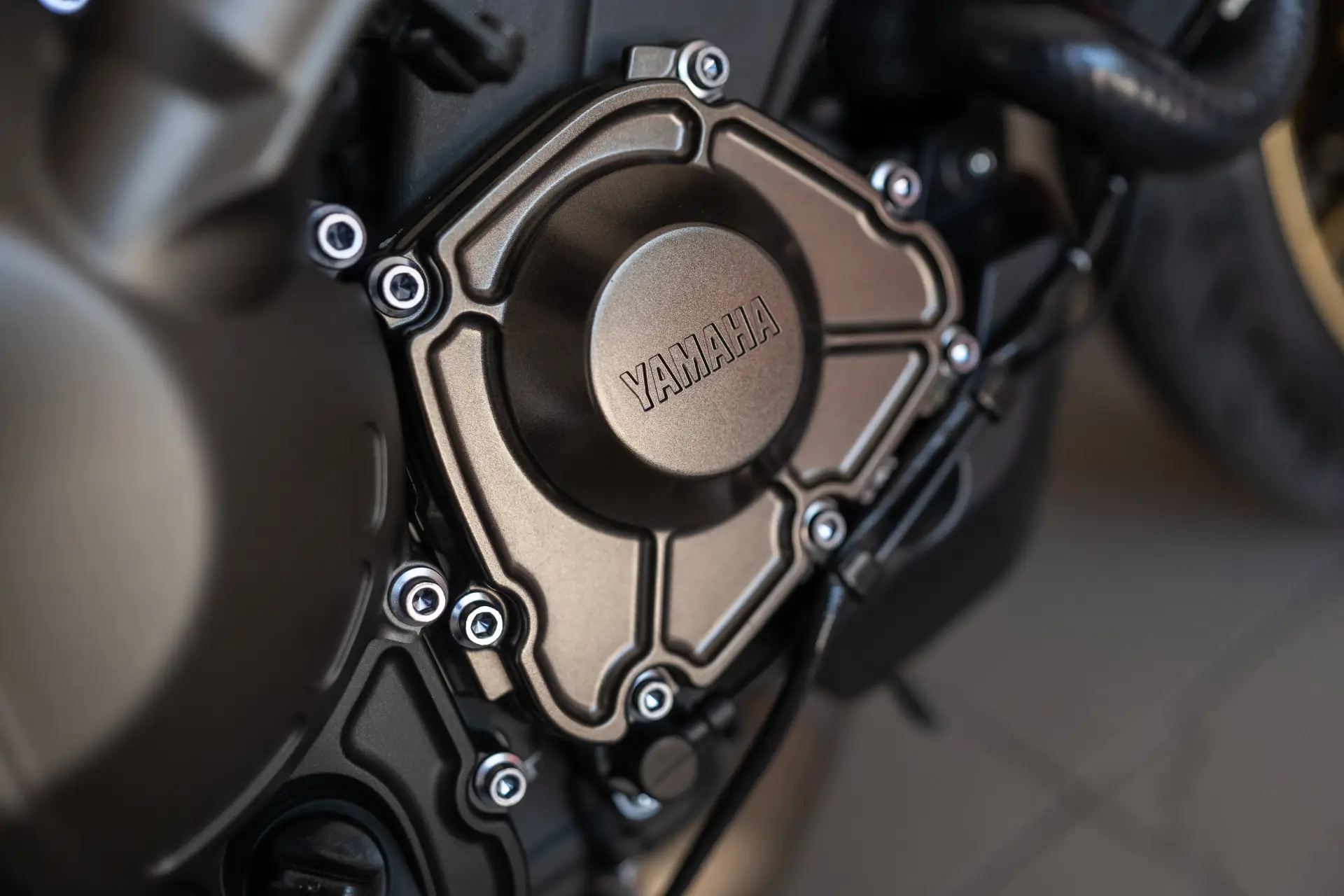
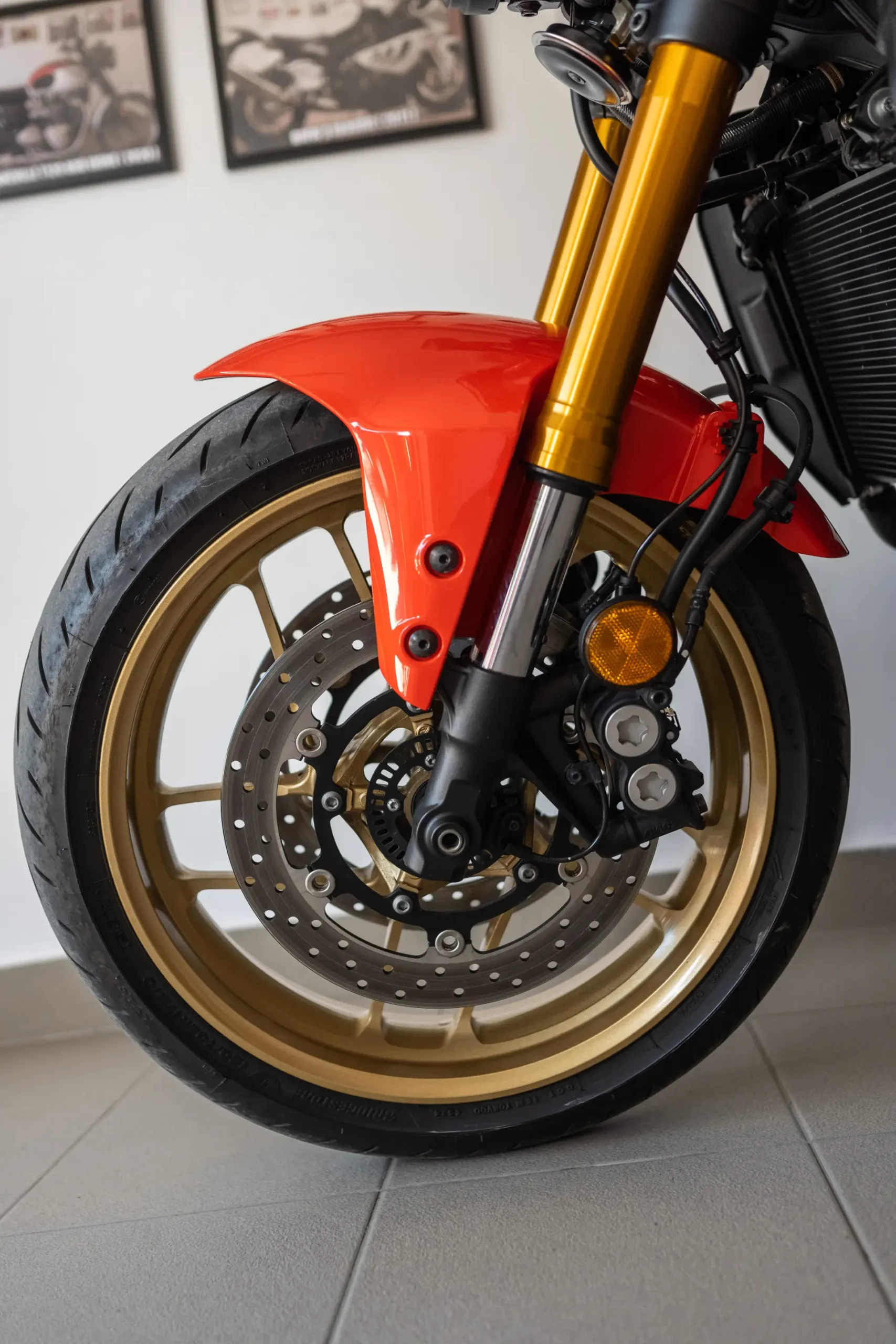
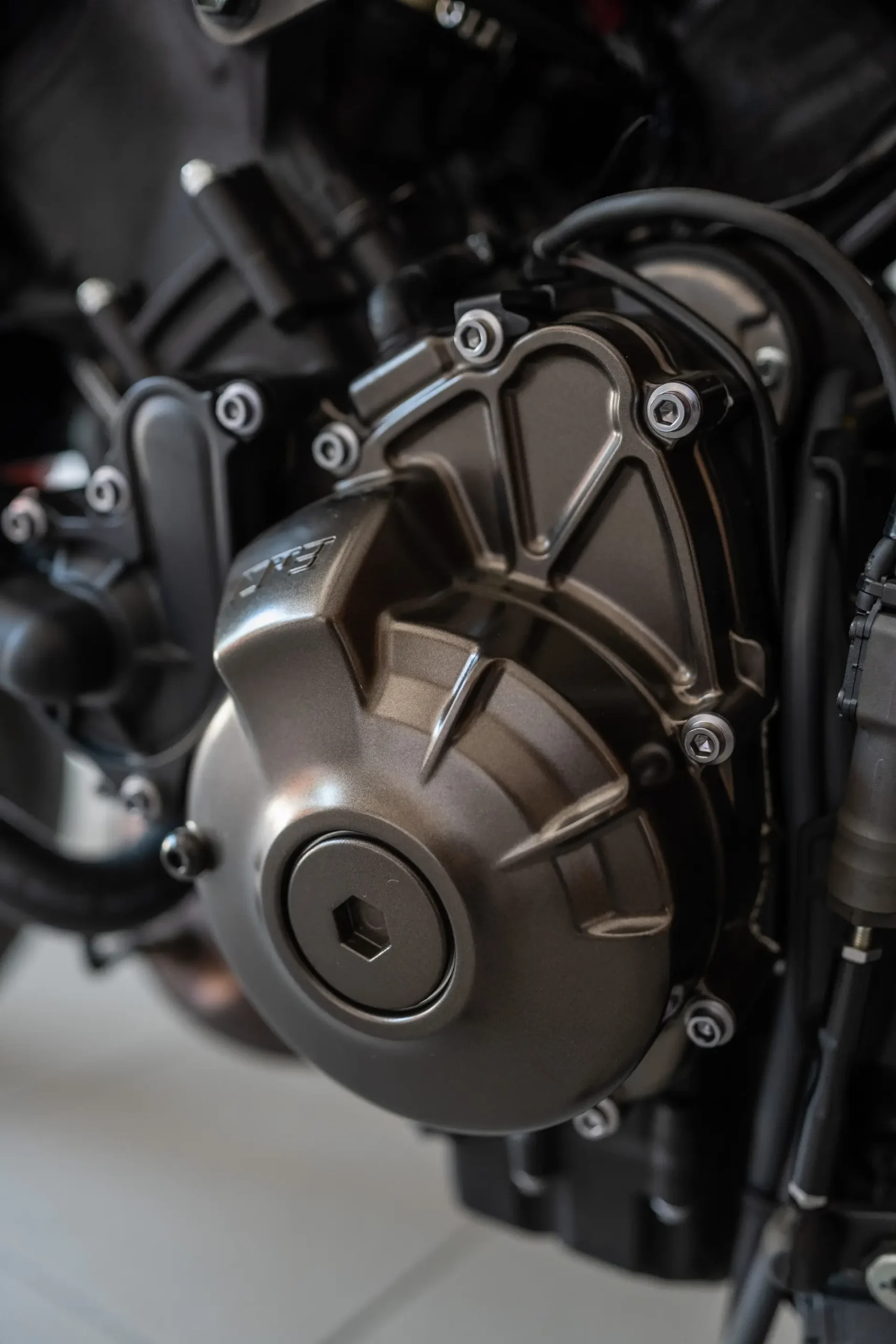
In 2022, the XSR 900 gets a major upgrade with a new, more powerful 890 cc CP3 engine. It is equipped with a lighter Deltabox frame, radial Brembo master cylinder and lightweight Spinforged wheels for a more precise and stable ride. It received a modern package of electronics, including traction control, driving modes, quickshifter and cornering ABS.
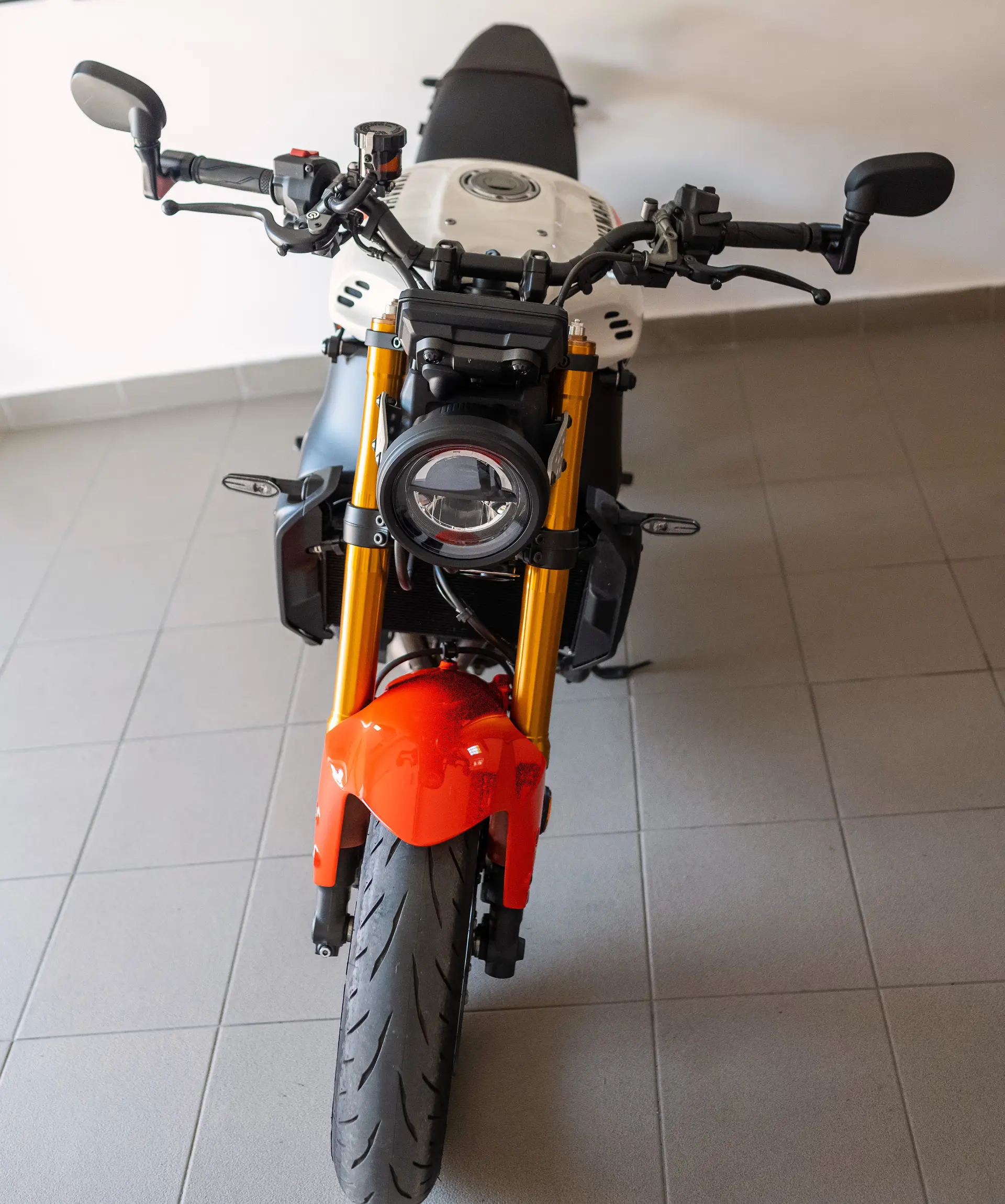
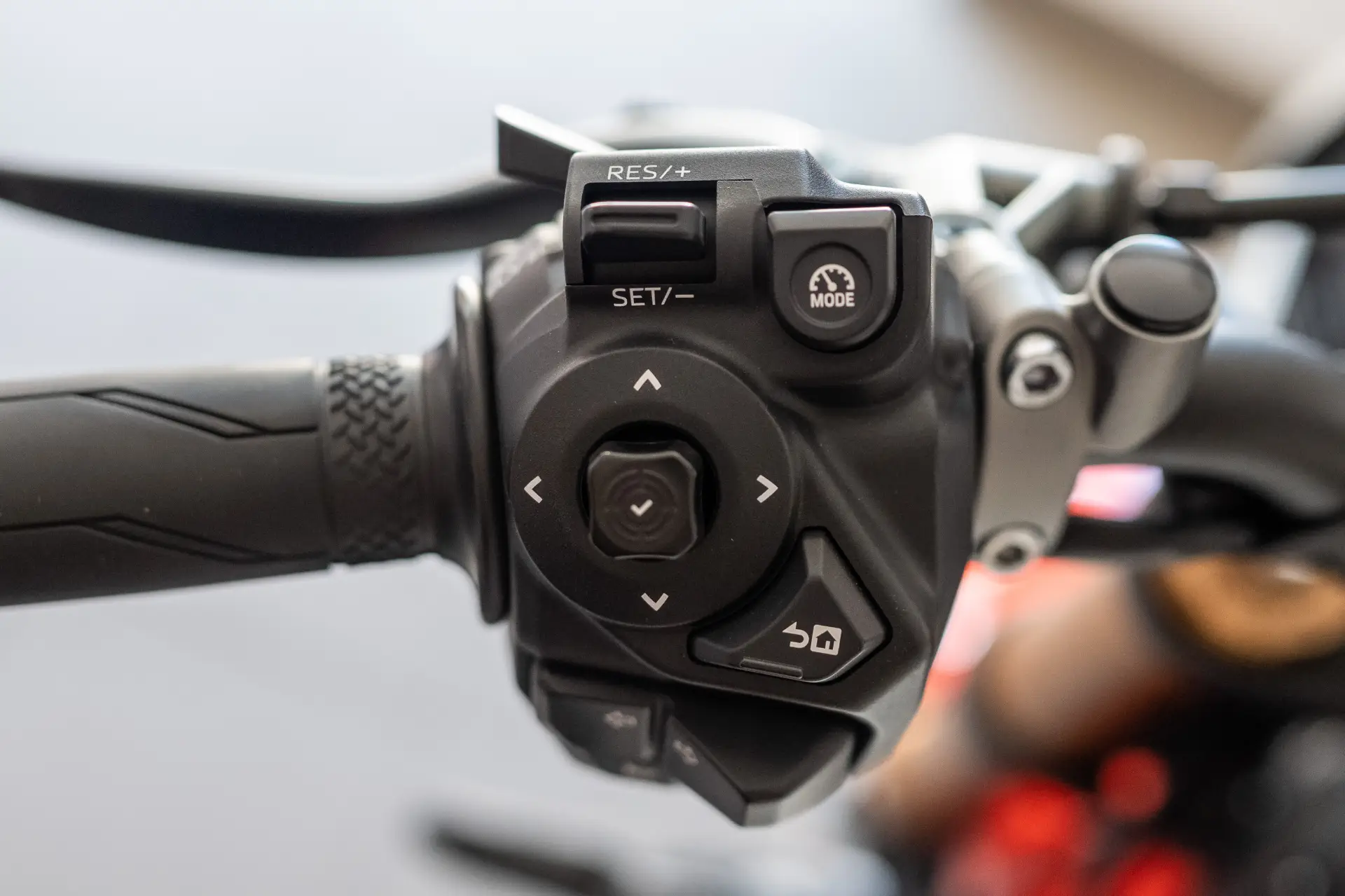
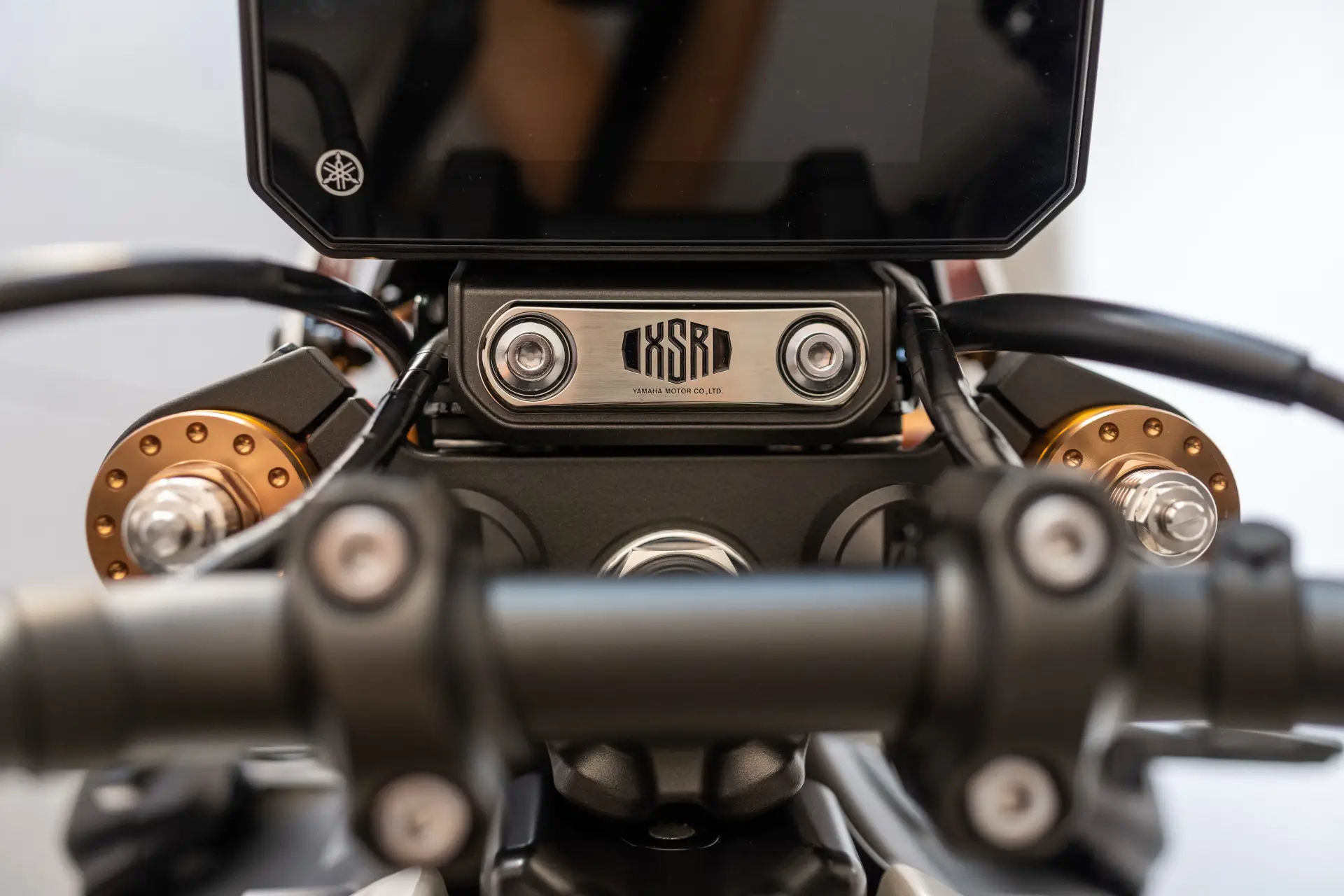
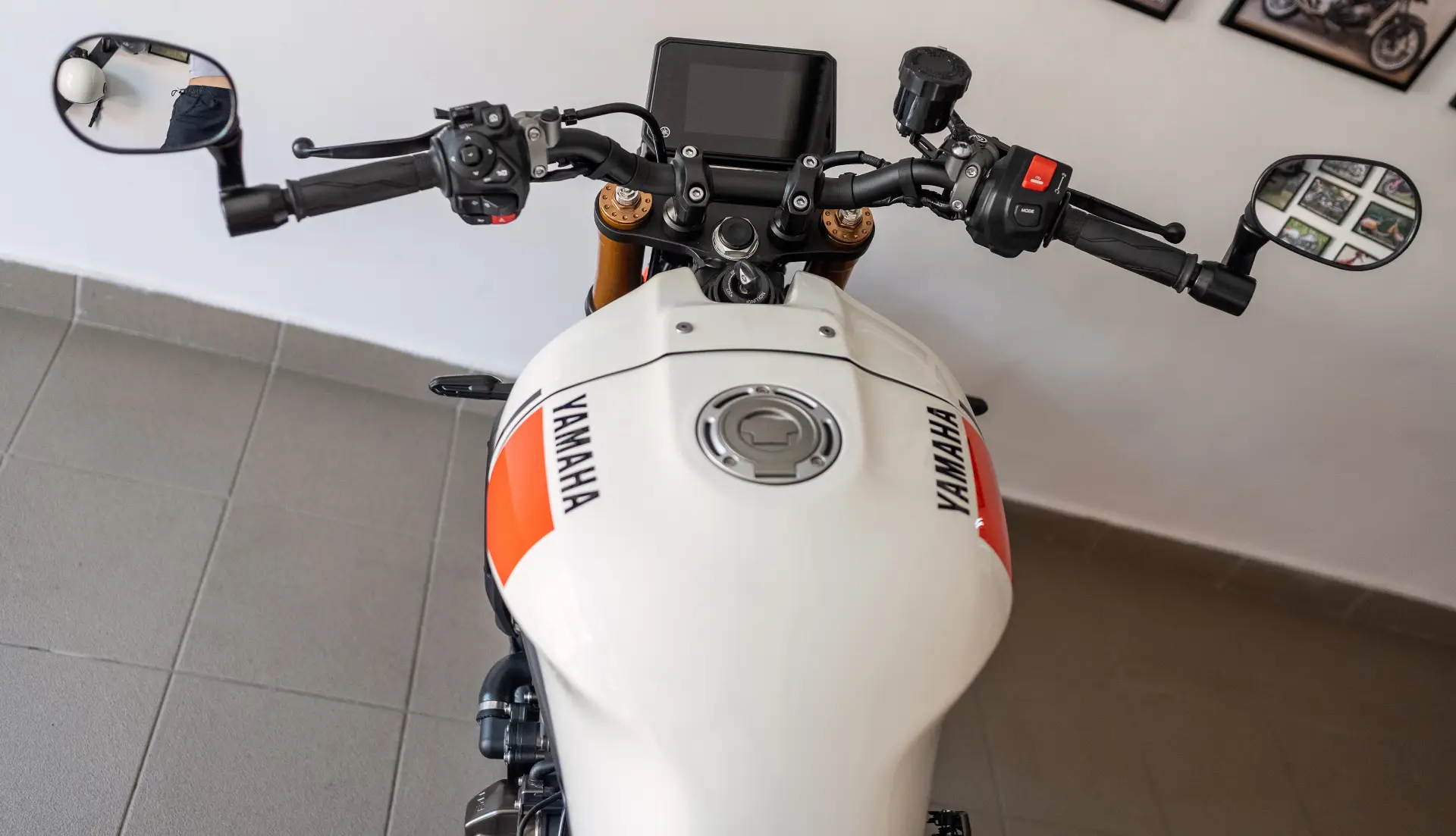
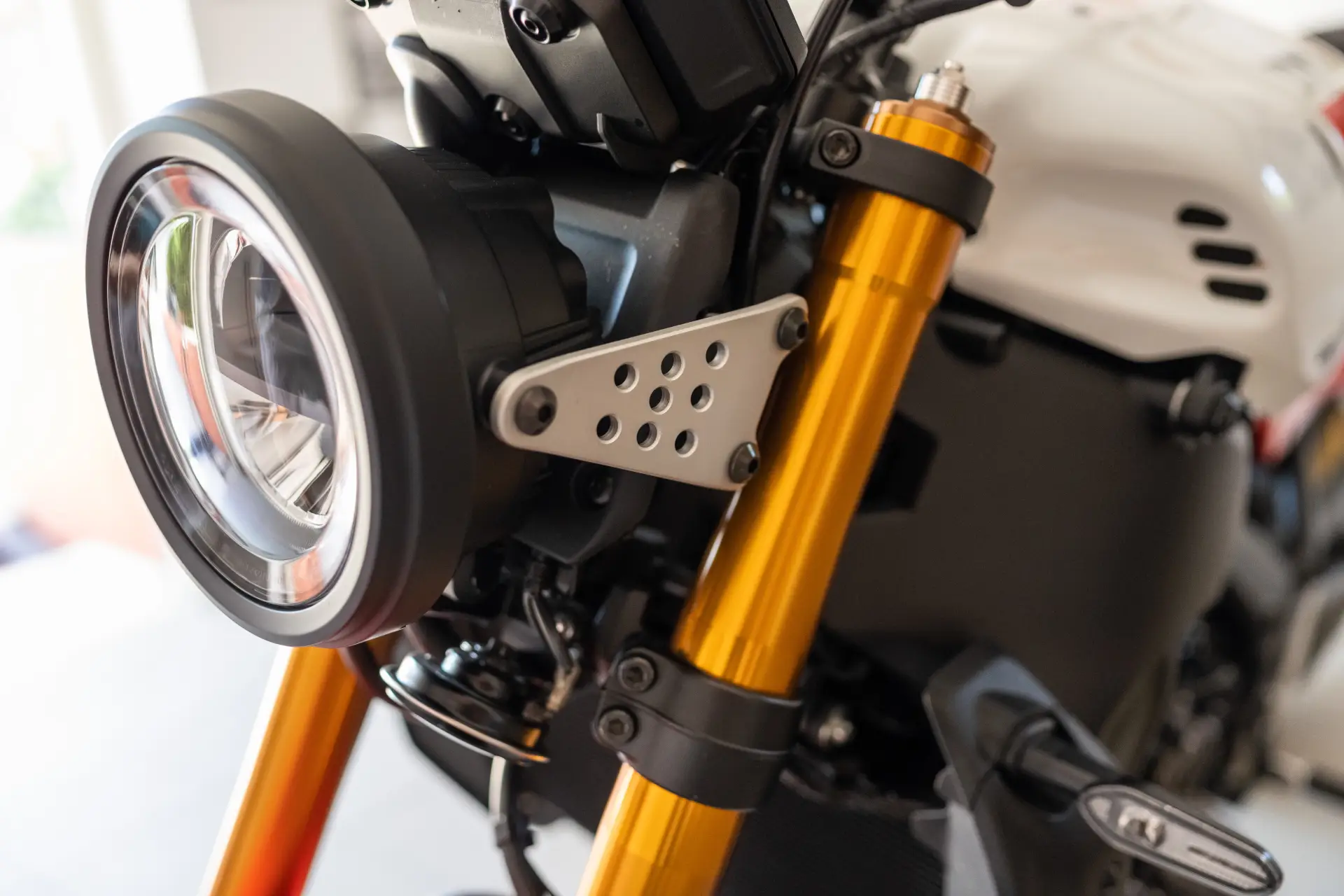
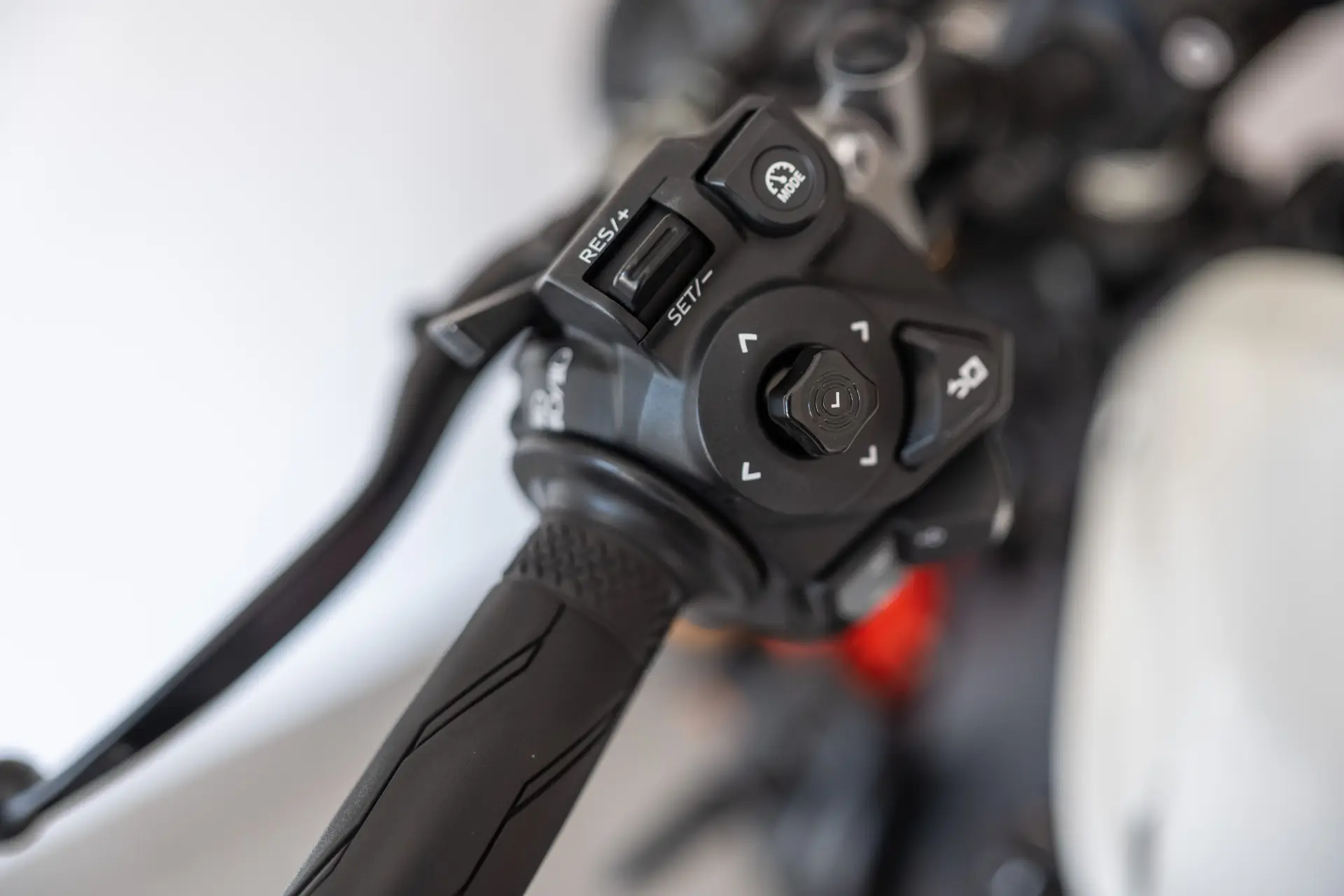
Our model is from 2025 and continues this story (“Legend Reborn”), drawing inspiration from the details of old racing machines ( like the gap between the tank and the seat, or the drilled headlight brackets ). Behind the retro appearance hides a serious and modern sports machine. At the rear is a new KYB mono-shock with full adjustment ( preload, compression and rebound ) and a revised lever for better traction feel. The shape of the seat and steering wheel has been changed, an adjustable clutch lever and rubber-mounted footrests have been installed to reduce vibrations, as well as a practical USB-C port on the dashboard.
We wanted to say a lot about this modern classic, to explain a lot… all this to bring this great motorcycle closer to you, but we stop here and at the end of the story we present the Yamaha XSR 900, produced in 2025. Through the pictures and specifications, enjoy the offered model.
| Model | Yamaha XSR 900 |
| Year | 2025 |
| Category | Naked |
| Displacement | 890 ccm |
| Engine type | Three cylinder, four stroke |
| Power | 87,5 kW / 118 KS |
| Top speed | 230 km/h |
| Bore x stroke | 78 x 59,1 mm |
| Fuel control | DOHC |
| Cooling system | Liquid |
| Gearbox | 6-speed |
| Transmission type, final drive | Chain |
| Front tyre | 120/70-ZR17 |
| Rear tyre | 180/55-ZR17 |
| Front brakes | Dual disc |
| Rear brakes | Single disc |
| Weight incl. oil, gas, etc. | 195 kg |
| Fuel capacity | 14 l |
| Mileage | 11.000 km |
| Price | 10.490 EUR |